
That old maple stump sitting in the corner of your Hopedale yard has two very different fates, and folks mix them up constantly. Grinding and removal sound like the same job, but they leave you with completely different results, different holes, and different bills. At Bump Your Stump we get this question every single week, usually right after someone finally trips over the same stump for the hundredth time and decides enough is enough. Knowing the difference before you call saves you money and keeps your expectations honest.
What Stump Grinding Actually Does
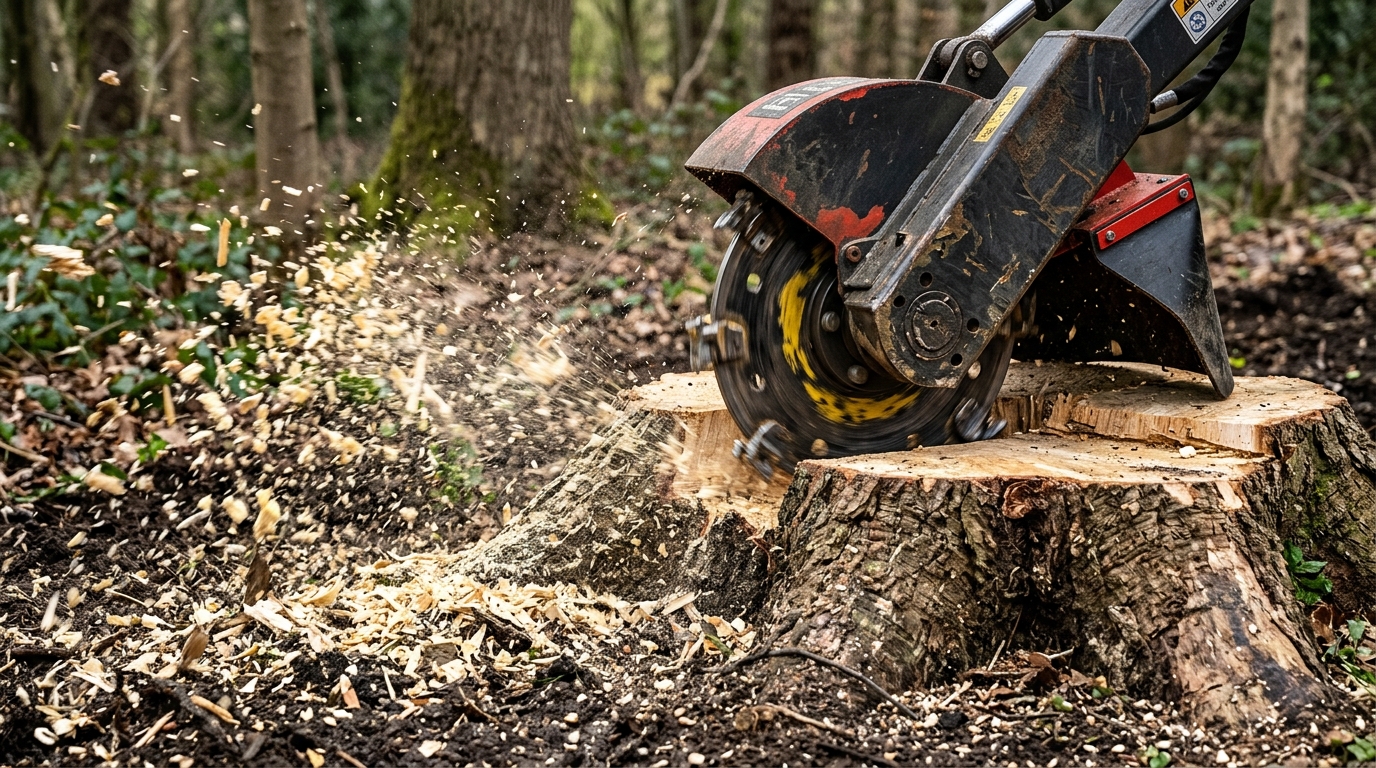
Grinding uses a machine with a spinning steel wheel lined with carbide teeth. That wheel chews the stump down into small chips, working from the top of the stump and going below grade, usually somewhere between four and twelve inches under the surface. What you’re left with is a pile of wood shavings you can rake back into the hole, and the visible stump is gone. The roots stay in the ground.
People are surprised by how much material comes out of one stump. A wide oak can produce a mound of chips two or three feet high before we’re done. Most of that gets tamped back down to fill the void, and within a season the ground settles and grass takes over the spot. You’d never know a stump lived there.
The reason grinding is the more common choice around here comes down to speed and how little it disturbs the rest of your yard. We’re not digging trenches or tearing up your lawn to chase roots. A single average stump often takes twenty to forty minutes on the machine. Our expert stump grinding services handle everything from a lone birch by the driveway to a whole cluster of stumps left behind after a lot clearing.
What Stump Removal Actually Does
Removal means pulling the entire stump out of the ground, root system and all. Instead of grinding the wood into chips, the goal is to extract the whole mass. That usually involves digging around the base, cutting major roots, and prying or hauling the stump free with equipment. When it’s finished, you have the stump gone completely along with the bulk of the roots that anchored it.
The tradeoff is the hole. Full removal leaves a crater, sometimes several feet across and just as deep, plus a mess of torn soil and root channels. You’ll need fill dirt and often a truckload of loam to bring the area back to level. It’s a bigger, messier job by nature, and it takes a real toll on the surrounding lawn.
Because it’s so invasive, full extraction makes sense in a narrower set of situations. If you’re pouring a foundation, laying a patio, or putting in an in ground structure where roots simply cannot remain, removal is the honest answer. For most homeowners who just want the eyesore gone and their yard usable again, it’s more than the job calls for.
The Real Differences Side by Side
The clearest way to sort this out is to look at what actually changes in your yard with each approach. The stump disappears either way. What differs is the roots, the hole, the mess, the timeline, and the cost.
- Grinding removes the visible stump and leaves the roots to decay naturally underground.
- Removal pulls the stump and most of the root system out entirely.
- Grinding leaves usable wood chips and a shallow fill you can plant grass over quickly.
- Removal leaves a large hole that needs fill dirt and loam to level.
- Grinding is faster and gentler on the rest of your lawn.
- Removal is heavier work and costs more because of the digging and cleanup.
- Grinding cannot fully clear roots for construction, removal can.
Around Hopedale we grind far more stumps than we ever fully remove, and it’s not because grinding is easier for us. It’s because grinding solves the actual problem most people have. They want the stump gone, they want to mow over the spot, and they don’t want their yard looking like a construction site for a month.
What About Those Leftover Roots
This is the honest sticking point with grinding, and I’d rather tell you straight. When we grind a stump, the roots stay in the ground and slowly break down over the next few years. For the vast majority of trees, this is a non issue. The roots rot away quietly and enrich the soil as they go.
A few species can throw up suckers after grinding, meaning little shoots that pop up from the remaining roots trying to regrow. Some maples, locusts, and certain poplars are known for it. If you’ve got one of those, we’ll flag it and talk through options so you’re not surprised by green sprouts next spring. Most of the time a few passes with a mower ends the fight.
For anything near a septic line, a foundation, or a water pipe, roots left behind almost never cause trouble because they’re dead and shrinking, not growing. Live roots seeking water are the ones that crack pipes. Once the tree is cut and the stump is ground, that pressure is gone.
How Cost Breaks Down for Each
Grinding is priced mostly by the size of the stump, measured across the widest point at ground level, and by how many you have. A single small stump might run in the low hundreds, while a wide hardwood or a batch of stumps costs more. Access matters too. A stump tucked behind a fence or up a steep bank takes longer to reach, and that shows up in the quote.
Full removal costs noticeably more for the same stump. You’re paying for the digging, the equipment, the hauling of the stump and roots, and often the fill dirt to close the hole afterward. It’s not unusual for removal to run two or three times what grinding the same stump would. That gap is exactly why we walk customers through what they truly need before quoting the heavier job.
Seasons play a part too. Ground that’s frozen solid in a Hopedale January makes any digging job harder, so removal in deep winter can cost more or get pushed to a thaw. Grinding, by contrast, we can do in most weather as long as we can safely get the machine to the stump.
Which One Is Right for Your Yard
Start with what you plan to do with the space. If you want lawn, a garden bed, or just a clean corner where a stump used to be, grinding is almost always the right call. It’s cleaner, cheaper, and faster, and the spot heals over in a season.
Removal earns its keep when nothing can be left underground. Building over the spot, installing hardscape, or clearing land where root mass genuinely gets in the way are the moments it makes sense. For those, being thorough beats being tidy.
Sometimes the whole tree is still standing and the stump is only half the conversation. If you’re taking down a tree first, our reliable tree removal crew can drop the tree and grind the stump in one visit, which saves you a second trip charge and gets your yard back in one shot.
What Happens After the Job
After grinding, you’re left with a mound of chips and fine soil sitting in the void. We rake it level as part of the work. Over the following weeks that fill settles, so it’s smart to keep a little extra loam handy to top it off before you seed. Grass usually takes hold fast once the chips break down.
You can also haul the chips off to use as mulch elsewhere in your beds, which a lot of gardeners around here like to do. Fresh wood chips work great around trees and along paths. If you’d rather we take them away, that’s easy to arrange.
Curious what finished work actually looks like before you decide? You can browse our project gallery and see real Hopedale yards before and after, which tends to answer the settling and cleanup questions faster than any description.
When Storms Force the Question
A nor’easter or a heavy summer microburst can snap a tree and leave a jagged trunk and stump where a healthy tree stood the day before. After the mess is cleared, that stump has to go one way or the other. Our storm damage cleanup work often ends with grinding the stumps left behind once the fallen limbs and trunk are hauled out.
In those cases grinding is usually the practical move because you’re already dealing with a torn up yard and want it back to normal fast. Removal only enters the picture if the downed tree took out something you plan to rebuild on the same footprint.
Getting a Straight Answer for Your Situation
The smartest thing you can do is have someone look at the actual stump. Photos help, but measuring the width, checking the access, and spotting the species in person tells us which approach saves you money and headaches. No two stumps sit the same way in the ground.
When you’re ready to sort out grinding versus removal for your own yard, schedule a free quote today and we’ll give you an honest read on which one your stump actually needs, not the pricier option by default.
Most people who’ve been staring at a stump for years are shocked how quick the fix is once they stop guessing and get a real look. One morning of work and that corner of the yard is finally yours again.
Frequently Asked Questions
Is stump grinding cheaper than full stump removal?
Yes. Grinding is usually the more affordable choice because it’s faster and doesn’t involve digging out roots or hauling away a large stump. Full removal can run two or three times more for the same stump due to the extra labor, equipment, and fill dirt needed to close the hole.
Will the tree grow back after grinding?
For most trees, no. The stump is ground below grade and the remaining roots decay over time. A few species like some maples and poplars can send up suckers, but those are easily handled by mowing over them a few times until they stop.
How deep does grinding go?
We typically grind four to twelve inches below the surface, depending on the stump and what you plan to do with the spot. That’s plenty deep to plant grass over. If you need it deeper for a specific reason, let us know and we’ll go further where it’s safe.
Do I need removal if I’m building over the spot?
If you’re pouring a foundation or laying hardscape where roots cannot remain, full removal is the honest answer. For lawn, gardens, or general cleanup, grinding does the job for far less money and mess.
What do you do with the wood chips left behind?
We rake them back into the void to fill it, and they settle over the following weeks. You can keep them as mulch for your beds or paths, or we can haul them away if you’d rather have the area cleared.
Can you handle both the tree and the stump in one visit?
Yes. If a tree is still standing, we can remove it and grind the stump the same day, which saves you a second trip charge and gets your yard back to normal in one shot.