
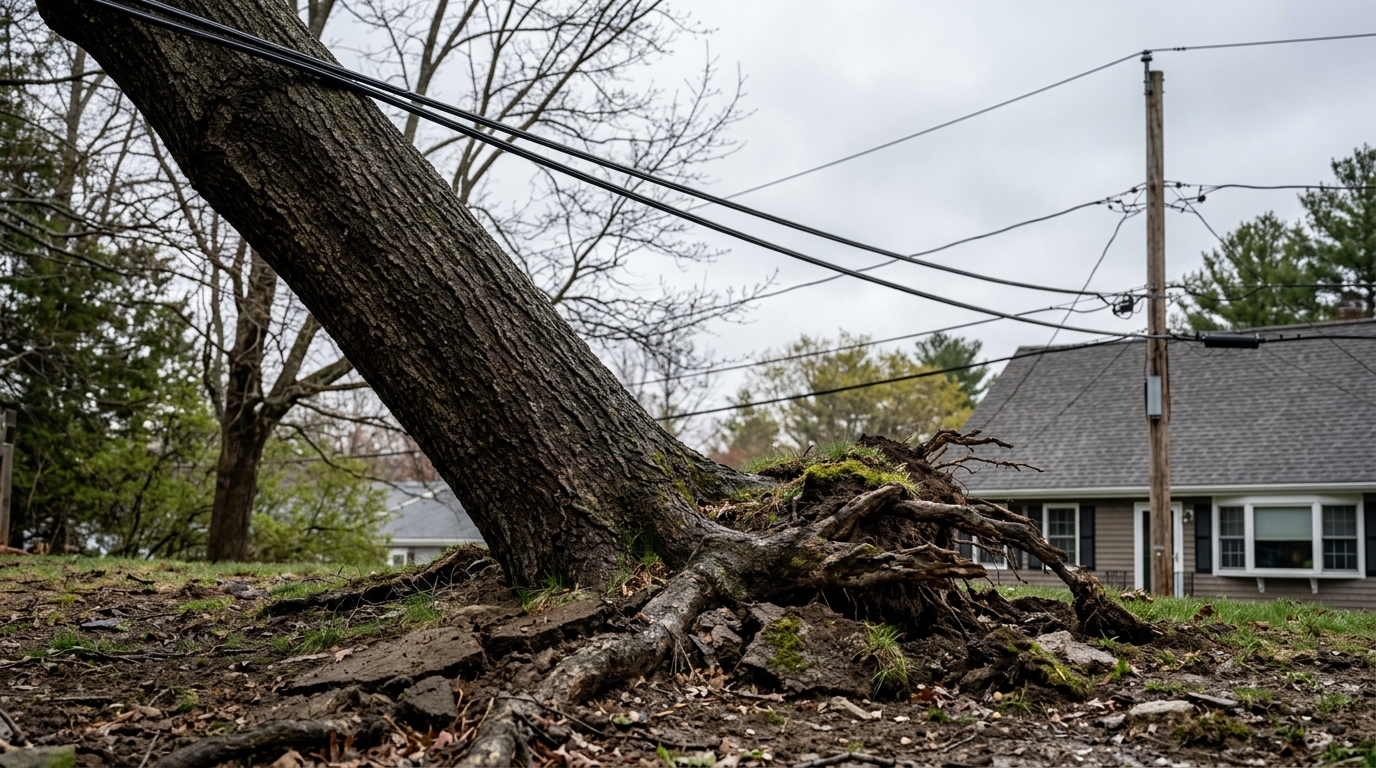
A maple that leaned a little last spring can be resting on the service drop by fall, and once it touches the lines feeding your house, you have a fire and outage risk sitting in your yard. We see this most after wet Hopedale springs and the wind events that roll through here in March and November. When a tree near power lines starts to tilt, the smart move is to treat it like the emergency it is, and that’s the work we do at Bump Your Stump Stump Grinding & Tree Service LLC, where we handle leaning trees and the wires they threaten every season.
The reason this matters more than a tree leaning over open lawn is simple. Wood plus electricity plus wind is a bad combination, and a limb doesn’t need to snap the wire to cause trouble. It can pull the connection off your house, spark a ground fire, or drop live lines across a driveway where kids walk to the bus.
How to Tell the Lean Is Getting Dangerous
Not every lean is a crisis. Plenty of trees grew crooked their whole lives and will keep standing for decades. The dangerous lean is the one that changed. If a tree that stood straight last year is now angled toward the wires, something shifted underground or in the trunk, and that is what you watch for.
Walk the base of the tree after a storm. You are looking for soil that has heaved up on one side, roots pulling out of the ground, or a fresh crack in the ground a few feet from the trunk. Those are the tells that the root plate is failing, and a failing root plate near power lines is the kind of thing we want to look at within a day or two, not next month.
- The lean increased noticeably over a single season
- Soil is mounded or cracked on the side opposite the lean
- Roots are lifting out of the ground near the trunk base
- A vertical crack or split runs up the trunk
- Branches are already brushing or resting on the wires
- Fungus, mushrooms, or soft rotten wood at the base
One more thing people miss. A tree can look healthy up top and be hollow at the base. If you knock on the lower trunk and it sounds like a drum instead of solid wood, the structure holding that lean up may be thinner than it looks. That’s worth a closer inspection before the next windstorm decides for you.
Why Trees Near Power Lines Fail Here in Particular
Our part of Massachusetts gives trees a hard time in ways that show up as leans. The freeze and thaw cycle from December through March works soil loose around roots. Heavy wet snow loads one side of a canopy and gradually pulls the whole tree that direction. Then a summer thunderstorm with a 45 mile per hour gust finishes what winter started.
The species matters too. White pines around here grow tall and shallow rooted, and they lean toward whatever open sky they can find, which is often the cleared corridor where the power lines run. Silver maples split easily at tight branch unions. Older Norway maples get root rot that you cannot see until the tree is already tipping. When any of those grow within reach of a service line, the odds of a problem climb.
The utility trims the big transmission corridors, but the wire running from the pole to your house is your side of the fence, and that’s exactly where the risky leaning trees tend to be. That gap is why so many homeowners get caught off guard.
What Makes Removal Near Wires Different From a Normal Take Down
Dropping a leaning tree in an open field is straightforward. Dropping one that is angled over a live 120 or 240 volt service drop is a different job entirely, and it is not one to try with a rented saw and a rope from the hardware store. The tree wants to go toward the wires already, which is the exact direction you cannot let it fall.
We handle these by taking the tree down in pieces from the top instead of felling it whole. Each limb gets cut and lowered in a controlled way so nothing swings into the lines. When the lean is severe or the wood is compromised, we set rigging to pull the trunk back against its own weight. It’s slower and more deliberate than a routine removal, and that care is the whole point when electricity is involved. This kind of reliable tree removal is where the difference between a pro and a weekend attempt really shows.
If the line is already touching wood, or a branch has pulled the connection at your house, that becomes a call to the utility first. Live lines are theirs to de energize. We coordinate the timing so the tree comes down safely once the danger from the wire itself is handled.
What to Do the Day You Notice the Lean
Keep people and pets away from the area under and around the tree, especially the side it is leaning toward. If any part of the tree is touching a power line, treat the ground nearby as if it could be energized and stay back. Do not run a mower, prop a ladder, or try to prune it yourself.
Take a couple of photos from a safe distance, one straight on and one from the side that shows the lean clearly. Those help us size up the job before we arrive and bring the right rigging. If you have had a storm, note whether the lean appeared or worsened right after it, because a sudden change tells us the root plate is likely the problem.
Curious what these jobs actually look like when they’re done right? You can browse our project gallery to see leaning removals, cleared corridors, and the tight rigging work near structures that these situations call for.
After the Tree Is Down: The Stump and the Cleanup
Once a leaning tree near the wires comes out, you are left with a stump, and a stump from a tree that was already failing can keep causing trouble. The roots that heaved the soil are still there, and the stump can sprout, attract carpenter ants, or trip you up right where you walk to the panel or the meter.
Grinding it out below grade lets you put that ground back to lawn or bed without a hump or a hazard. Our expert stump grinding services finish the job so the spot the leaning tree occupied is flat, clear, and easy to mow, with the grindings left to backfill or hauled off if you prefer.
When a lean came from a storm, there’s usually more than one tree involved. Broken limbs hung up in the canopy, debris across the yard, and other trees stressed by the same wind all need attention. Our storm damage cleanup handles the whole scene, not just the one tree that scared you, so your property is genuinely safe again and not just patched.
Deciding Between Removal and Trimming
Not every tree near a wire has to come down. If the lean is minor and stable and the only problem is branches growing into the lines, careful pruning can buy that tree years and keep the wires clear. The judgment call is whether the trunk and roots are sound enough to trust.
We will tell you straight. If we look at your tree and see a healthy trunk with a fixable branch problem, thoughtful trimming and pruning is the honest answer and we say so. If the root plate is lifting or the trunk is cracked, no amount of trimming makes that safe, and removal is the responsible choice. You will not get an upsell from us on a tree that just needs a haircut.
Ready to Get That Leaning Tree Handled
A tree tilting toward your service line only gets worse with the next weather, and Hopedale gives us plenty of weather. The sooner someone who does this work looks at it, the more options you have and the less likely you are to lose power or worse in the middle of a February storm.
If you have a tree leaning toward your wires right now, don’t sit on it. Reach out and schedule a free quote today so we can assess the lean, coordinate with the utility if the line is involved, and get that tree down before the weather makes the decision for you.
Come next spring, that corner of your yard can be open sky and mowable ground instead of a hazard you keep glancing at every time the wind picks up.
Frequently Asked Questions
How fast should I act on a tree leaning toward power lines?
If the lean is new, growing, or the tree is already touching the wires, treat it as urgent and have it assessed within a day or two. A failing tree near a service line can fail completely in the next windstorm, and once wood contacts a live line the risk jumps to fire and outage.
Should I call the power company or a tree service first?
If the tree is touching a live line or has pulled the connection off your house, call the utility first so they can de energize it. For a leaning tree that has not yet contacted the wire, call us to assess it and we will coordinate with the utility if their involvement is needed.
Can you remove a tree without turning off my power?
In many cases yes, when the tree is near but not touching the lines, because we take it down in controlled pieces and rig limbs away from the wires. If the tree is contacting the service drop, the utility handles de energizing before we work, and we time the removal around that.
Why not just cut off the branches touching the wires?
If the trunk and roots are sound, trimming the branches away from the lines can be the right fix. But if the tree is leaning because the root plate is lifting or the trunk is cracked, removing branches does not make the tree stable, and full removal is the safe answer.
What happens to the stump after removal?
We grind it out below ground level so you are left with flat, usable ground instead of a trip hazard or a source of sprouts and insects. The grindings can backfill the hole or be hauled away depending on what you want for that spot.
Do leaning trees get worse in winter here?
Often, yes. Freeze and thaw cycles loosen soil around roots, and heavy wet snow loads one side of the canopy and slowly pulls the tree that direction. A lean that looks minor in fall can be a real problem by late winter, which is why we like to catch these early.