
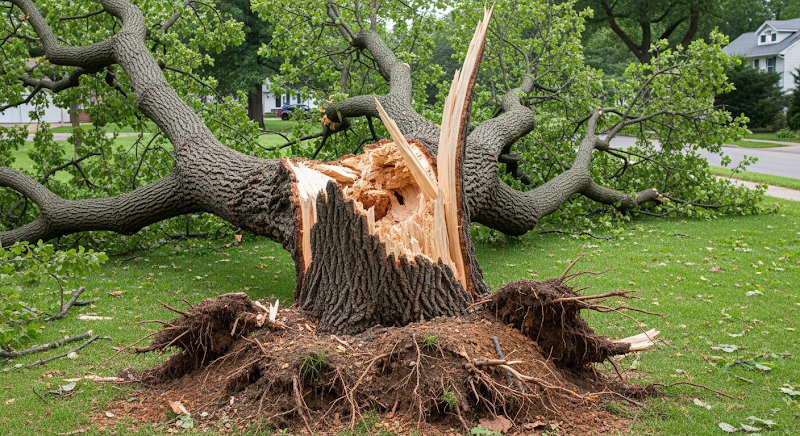
A nor’easter or a fast moving summer thunderstorm can turn a quiet yard in Hopedale into a tangle of snapped limbs, leaning trunks, and split canopies overnight. The crew at Bump Your Stump Stump Grinding & Tree Service LLC has responded to hundreds of these calls across Worcester County, and the pattern is always the same: the property owner is stressed, the driveway is blocked, and nobody is sure what is safe to touch. This guide walks through exactly what happens when a trained team arrives, so you know what the process looks like from the first phone call to the final rake of sawdust.
The First Priority Is Safety Not Sawdust
Before a single branch gets cut, a good crew reads the scene. Downed trees rarely fall cleanly. They lean against fences, drape across power lines, and pin themselves under tension so that one wrong cut sends a trunk springing sideways. A professional walks the property looking for these hazards first: hanging limbs called widowmakers, cracked crotches that could drop without warning, and root plates that have lifted the ground several inches.
Assessing Power Lines and Structural Contact
If a tree is touching or near an electrical service line, the work stops until the utility is notified. In Massachusetts that usually means coordinating with the local provider before any climbing or cutting near the drop. Crews also check whether a limb has punched through a roof, cracked a soffit, or bent a gutter, because removing weight in the wrong order can worsen the damage. This assessment often takes fifteen to thirty minutes on a complex property, and it is the most valuable part of the entire job.
Identifying Trees Under Tension
A trunk bent like a drawn bow stores enormous force. Cutting it at the wrong point releases that energy instantly. Experienced sawyers read the compression and tension sides of a bent stem, make relief cuts, and use rigging to control the release. This is the difference between a controlled job and a trip to the emergency room, and it is why storm work is not a task for a homeowner with a rental chainsaw.
How the Cleanup Actually Unfolds
Once hazards are mapped, the crew builds a plan and works from the outside in. Loose debris on the ground gets cleared first to create safe footing and drag paths. Then the team addresses suspended limbs, followed by the main trunk or leaning tree. Rigging ropes, pulleys, and sometimes a crane lower heavy sections instead of dropping them, which protects lawns, patios, and anything still standing nearby.
Sectioning and Rigging Large Limbs
A big oak limb hanging over a shed cannot just be sawed loose. Climbers or bucket operators tie it off, cut it into manageable pieces, and lower each one under control. On tight lots in Hopedale, Mendon, and Milford, this careful piecework is often the only way to remove a damaged tree without crushing a fence or a neighbor’s flower bed.
When Full Removal Becomes Necessary
Not every damaged tree can be saved, and some are too compromised to leave standing. A trunk with a long vertical crack, a tree that has lost more than half its canopy, or one with an uprooted base usually needs to come down entirely. That is where safe and reliable tree removal matters, because taking down a weakened storm damaged tree demands more caution than a routine removal on a calm day.
Debris Handling and What Leaves Your Property
Cleanup generates surprising volume. A single mature maple can produce several truckloads of brush, logs, and chips. A professional crew feeds smaller branches through a chipper on site, cuts larger wood into rounds, and hauls the material away or stacks it where you want it. Ask up front whether debris removal is included, because some outfits leave the wood behind and that changes the price and the effort left for you.
Wood Chips, Firewood, and Log Disposal
Some property owners keep the chips for mulch beds or the rounds for firewood. Others want everything gone. A clear conversation before work begins prevents a pile of oak logs sitting in the yard for a season. Storm wood is often full of embedded metal, grit, and stress fractures, so it does not always make ideal firewood, and a good crew will tell you that honestly.
Protecting Turf and Hardscapes During Haul Out
Dragging heavy logs across a wet lawn tears it up. Careful crews lay down plywood or mats to spread the load of equipment and protect driveways from chipper tires and log weight. Little details like this separate a company that respects your property from one that just wants to clear and go.
The Stump Question After the Storm
When a tree is removed at the base, you are left with a stump. Storm damaged trees often leave jagged, splintered stumps that are ugly and hazardous to mowers. Grinding them below grade turns that eyesore into usable ground you can seed, sod, or plant over within a week.
Grinding is a specialized step separate from removal, and it is worth planning for in the same visit. Our professional stump grinding services chase the roots down several inches below the surface so the remnant does not sprout, rot into a sinkhole, or trip anyone crossing the yard.
Why Leftover Stumps Cause Problems
A stump left in the ground invites carpenter ants, fungus, and termites within a few feet of the foundation. It also keeps sending up suckers if the species is prone to it, like poplar or ailanthus. Grinding removes the food source and lets you reclaim the space instead of mowing around a stubborn hump for years.
Timing, Insurance, and Documentation
After a major storm, demand spikes and reputable crews book fast. If a tree is on your house or blocking your only exit, that is an emergency and should be treated as one. If the damage is contained to the yard, you may wait a few days for scheduling, which is normal during a busy stretch.
Working With Your Homeowners Policy
Many Massachusetts policies cover tree removal when a tree strikes a covered structure, though coverage for trees that simply fall in the yard is often limited. Take clear photos before anything is moved, keep every invoice, and ask your provider what documentation they need. A seasoned tree company can supply an itemized estimate that adjusters recognize, which speeds up your claim.
What a Written Estimate Should Include
A trustworthy estimate spells out the scope: which trees, whether debris hauling is included, whether stump grinding is part of the job, and any coordination with the utility. Vague quotes lead to disputes. Detail protects both sides and helps your insurer understand exactly what was done and why it was necessary.
Choosing the Right Crew for Storm Work
Storm season brings out roaming operators who chase disasters, knock on doors, take deposits, and vanish. Verify that whoever you hire carries liability and workers compensation insurance, because if an uninsured worker is hurt on your property, you could be exposed. Ask how long they have worked in the area and whether they can show recent local jobs.
For thorough storm damage cleanup and recovery, local knowledge counts. A crew that knows the soils, the common species, and the way ice loads and coastal winds behave in this part of Massachusetts anticipates problems that an out of town truck simply will not see coming.
Questions Worth Asking Before You Sign
Ask who is actually doing the cutting, whether they are climbing or using a bucket, how they will protect your lawn, and what happens if hidden damage turns up mid job. Clear answers signal a professional. Dodged questions and pressure to pay cash upfront are red flags no matter how urgent the situation feels.
After the Cleanup: Restoring and Preventing
Once the mess is gone, the property still needs attention. Torn turf gets raked and reseeded, ruts get filled, and the remaining trees deserve a look. A tree that survived one storm may have hidden cracks or a lopsided canopy that makes it the next casualty.
Inspecting the Trees That Survived
Proactive pruning of weak limbs, cabling of split leaders, and thinning of dense canopies reduce wind resistance and lower the odds of a repeat visit next season. Spotting a leaning trunk or a fungal conk early can save a house from a future strike. This forward looking care is often the most valuable service a tree company provides after the debris is gone.
When you are ready to clear damage, reclaim your yard, or have a shaky tree evaluated before the next front rolls through, schedule an appointment today and get a straightforward assessment from a crew that works these towns every week.
Frequently Asked Questions
Frequently Asked Questions
How quickly should I have a fallen tree removed after a storm?
If a tree is on your house, blocking your driveway, or resting against a power line, treat it as an emergency and call right away. If the damage is confined to the yard and poses no immediate hazard, it can usually wait a few days, which is common during the busy stretch right after a major storm.
Does homeowners insurance cover storm damage tree removal?
Many Massachusetts policies cover removal when a tree strikes a covered structure such as your house, garage, or fence. Trees that fall in the open yard without hitting anything are often covered only partially or not at all. Photograph the damage before anything is moved and keep all itemized invoices for your claim.
Should I try to cut up a downed tree myself?
Storm damaged trees are often under tension and can spring or roll unpredictably when cut, which causes serious injuries every year. Limbs suspended in other trees and stems near power lines are especially dangerous. It is far safer to let an insured crew that reads these forces handle the work.
Is stump grinding included in storm cleanup?
Grinding is usually a separate step from removal, but it can be scheduled in the same visit. Because storm removals often leave splintered, hazardous stumps, planning to grind them below grade during cleanup saves a second trip and gives you usable ground to seed or plant.
What happens to all the wood and debris?
Smaller branches are typically run through a chipper on site while larger wood is cut into rounds. Depending on your preference, the crew hauls everything away, leaves chips for mulch, or stacks rounds for firewood. Confirm what is included before work begins so nothing unexpected is left behind.